What is Saas Sales?
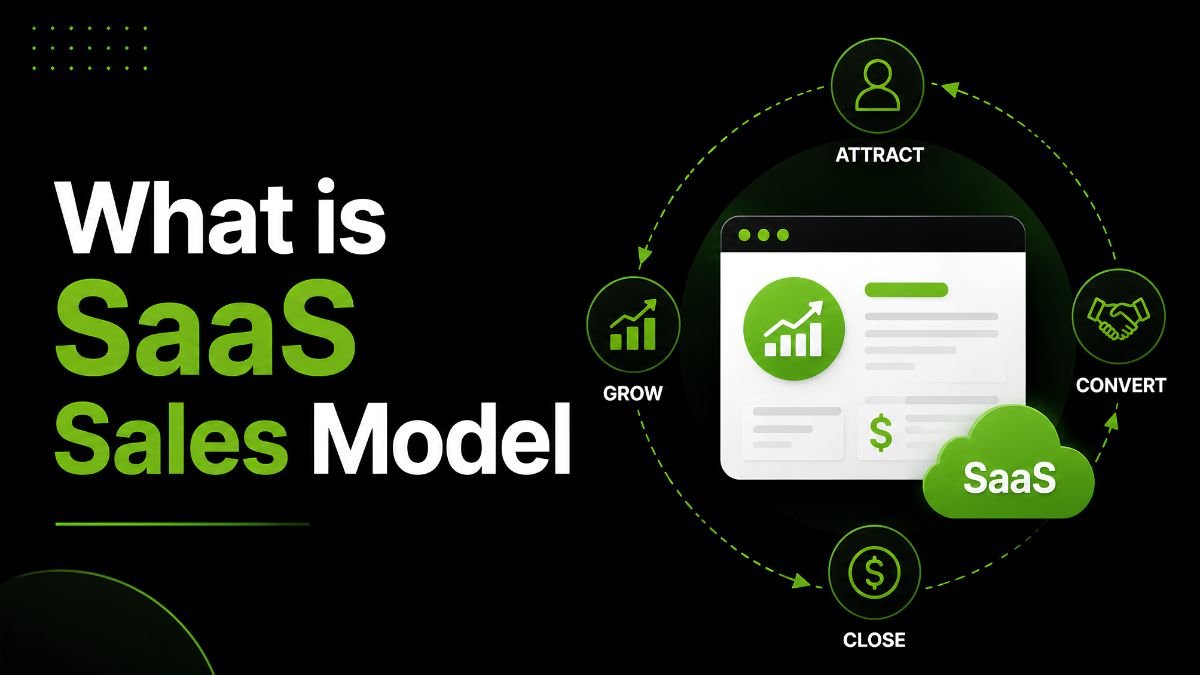
SaaS sales is the process of selling cloud-based software through a subscription model. Customers usually pay monthly or yearly to keep using the software. For example, if you are a B2B SaaS company, the goal will be to create a customer journey by focusing on recurring subscription services.
The primary purpose of your business as a SaaS salesperson is to ensure that your customers succeed with the product. This helps them renew their licenses and move to better plans as their business evolves and grows.
How Is SaaS Sales Different From Traditional Sales?
Instead of selling software as a product where one-time transactions are king, SaaS is all about creating ongoing customer relationships.
Here are the biggest differences between SaaS sales and traditional sales.
| SaaS Sales | Traditional Sales |
| Customers usually pay every month or year. | Customers usually pay once. |
| The company keeps working with the customer after the sale. | The sale may end after the customer buys the product. |
| Keeping current customers is very important. | Getting new customers is often more important. |
| The goal is to keep customers for a long time. | The main goal is to make the sale. |
| Customers can change or cancel their plans. | Customers usually buy a fixed product. |
| Free trials and demos are common. | Free trials are less common. |
| Companies earn from renewals and plan upgrades. | Companies earn when customers buy again. |
| Customer support and success teams help after the sale. | Less follow-up may be needed after the sale. |
How the SaaS Sales Process Works?
The SaaS sales process starts when a company finds a possible customer and ends when that customer signs up for a paid plan. However, the work does not stop there.
Here is how the process usually works:
1. Lead Generation
The very first thing that you have to do is identify leads, or clients who have an urge for the thing your SaaS software is capable of doing. The ways you acquire leads include SEO for SaaS websites, social media platforms, email marketing, referral programs, and direct outreach.
While the sales process for each SaaS firm is typically not varied, the route by which we source leads is what typically differentiates the various ones.
2. Lead Qualification
Next, you research their budget, business needs, decision-making authority, and timeline. This helps you understand if the lead has a realistic chance of purchasing your product or service.
3. Discovery Call
You speak with your prospect and discuss business goals, challenges, and current processes. The more the prospect shares, the easier it becomes to demonstrate the right service.
4. Product Demo or Free Trial
You show how the software works. Many SaaS firms also offer “free trials”. They allow their customers to experience the software before they purchase.
5. Handle Questions and Objections
Many buyers ask about price, security, integrations, or return on investment. You answer their questions with clear examples and real business benefits.
6. Close the Sale
When the customer feels confident, both sides agree on pricing and contract terms. The customer then starts the subscription.
7. Customer Onboarding
After the purchase, you help the customer set up the software. Good onboarding helps customers see value quickly.
8. Customer Success
You continue helping customers after the sale. You answer questions, solve problems, and make sure they reach their goals.
9. Upselling and Cross-Selling
As customers grow, they may need more features or a better plan. You can offer an upgrade or additional products that meet their needs. This helps the customer while increasing revenue for the SaaS company.
What is a SaaS Sales Model?
Different SaaS companies use different sales models. Here are the most commonly used models SaaS companies are opting for nowadays.
Self-Service
Customers sign up on their own. This model works well for low-cost software.
Transactional Sales
A sales representative guides customers through the buying process. This model works well for small and medium-sized businesses.
Enterprise Sales
Large companies often need custom pricing, multiple meetings, and longer negotiations. Enterprise deals usually involve several decision-makers.
Freemium
Customers use a basic version for free. They pay later if they want more features.
Tiered Pricing
In tiered pricing, customers pay based on how much they use the software. Different options available for companies include basic, professional, and even enterprise. Users select a plan based on the number of features they would love.
What is a SaaS Sales Funnel?
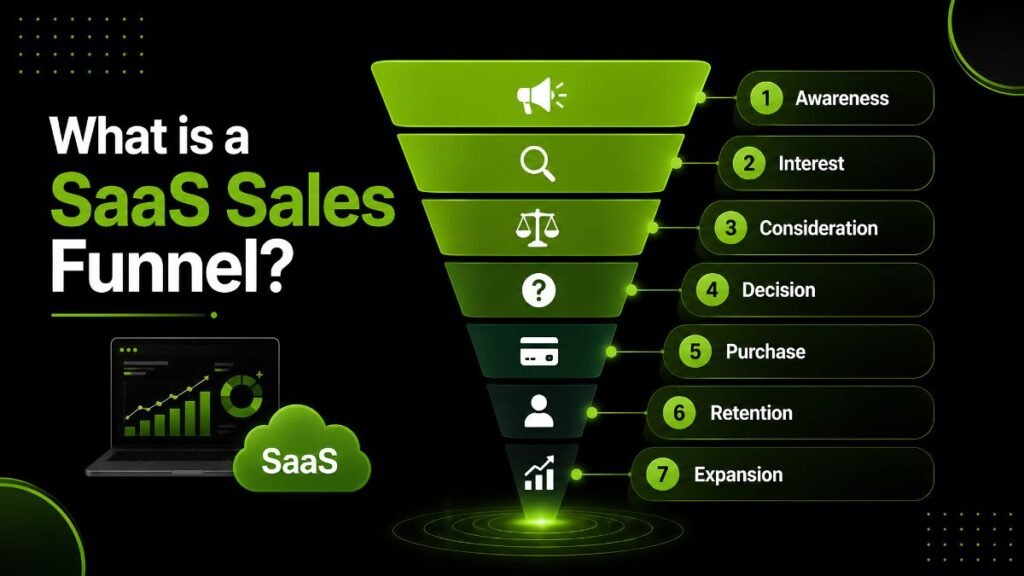
A SaaS sales funnel shows the steps a person takes before they buy your software. It starts when they first learn about your product. It ends when they become a paying customer.
Here are the main stages of a SaaS sales funnel:
- Awareness: People first learn about your software. They may find it on Google, social media, ads, or blogs.
- Interest: They visit your website to learn more. They may check your features, prices, or other pages.
- Consideration: They think about buying your software. They may compare it with other tools. They may also book a demo or start a free trial.
- Decision: They decide if your software is right for them. They may ask about the price, features, or support.
- Purchase: They choose a plan and pay for it. Now, they become your customer.
- Retention: You help customers get the most from your software. Good service can help you keep them for a long time.
- Expansion: Some customers may need more features later. They may move to a better plan or buy extra features.
Important SaaS Sales Roles
Many people work together to close deals.
- Sales Development Representative (SDR): Finds and qualifies new leads.
- Business Development Representative (BDR): Builds new business opportunities.
- Account Executive (AE): Gives product demos and closes deals.
- Customer Success Manager (CSM): Helps customers succeed after the purchase.
- Sales Manager: Leads the sales team and tracks performance.
SaaS Sales Metrics You Should Know
Successful SaaS companies track important numbers. Some of the most common metrics include:
- Monthly Recurring Revenue (MRR): Monthly subscription income.
- Annual Recurring Revenue (ARR): Yearly subscription income.
- Customer Acquisition Cost (CAC): Cost to gain one customer.
- Customer Lifetime Value (CLV): Total value a customer brings over time.
- Churn Rate: Percentage of customers who cancel.
- Win Rate: Percentage of deals you close.
- Conversion Rate: Percentage of leads that become customers.
- Sales Qualified Leads (SQLs): Leads ready for the sales team.
- Time to Close: Average time needed to complete a sale.
These numbers help you improve your sales process.
Common SaaS Sales Challenges
Every SaaS company faces challenges. Some of the most common include:
Long sales cycles
Enterprise sales with elaborate products have longer sales cycles. To remedy this, build relationships with prospects, provide content, and address any concerns.
Strong competition
The SaaS market is highly competitive. Many products solve similar problems. Sales teams need to clearly show why their product offers better value.
Security concerns
Organizations may be hesitant to adopt SaaS solutions due to concerns about data security. Proactively address these concerns by providing detailed information about your data security measures.
Integration with existing software
Customers may worry about whether the SaaS product will work with their current tools. Sales teams should explain available integrations and how the setup process works.
Subscription pricing
Convincing buyers about SaaS subscription pricing requires shifting their focus from the recurring cost to the clear return on investment (ROI).
Frequently Asked Questions
Is SaaS sales a good career?
Yes. Career progression, recurring revenues, and solid earnings for the right sales professional are found in SaaS sales.
How long is a typical SaaS sales cycle?
There is no fixed SaaS sales cycle. A low-cost SaaS product may sell within days, while enterprise SaaS deals can take several months. Price, product complexity, and the number of decision-makers can affect the sales cycle.
What skills do you need for SaaS sales?
You need Communication skills and problem-solving. You should also have negotiation skills, product knowledge, and relationship-building skills.
What is the difference between SaaS sales and software sales?
SaaS sales focuses on subscription-based cloud software. Traditional software sales often involve one-time software purchases.
Conclusion
SaaS sales isn’t just about closing deals on the software. It’s about solving your customers’ problems and empowering them with long-term value. By having a meaningful and support-driven relationship with your client.
It only stands to reason that with so many businesses transitioning into cloud-based software. The demand for quality SaaS salespeople will only increase.