What Is SaaS Marketing and How Does It Work?
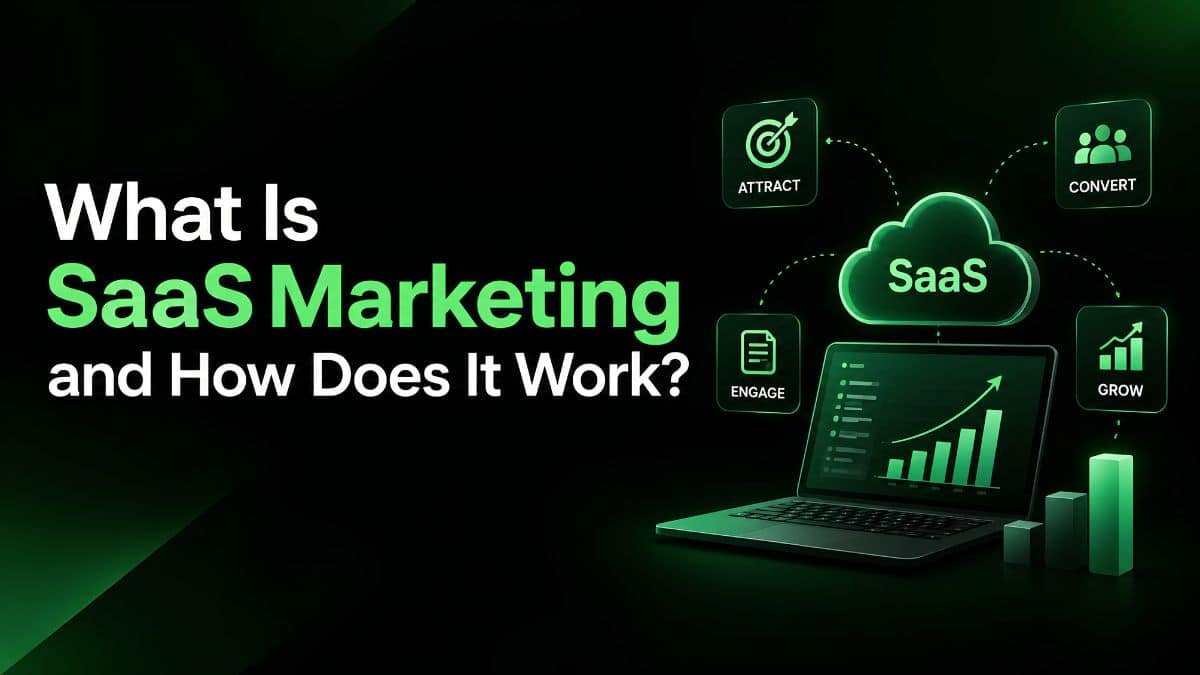
SaaS marketing helps software companies get new users and keep current ones. Users often pay a monthly or yearly fee to use them. SaaS products need a steady flow of users to grow. That makes SaaS content marketing different from many other types of marketing.
You do not only need to get a customer. You also need to help that customer use the product, stay with you, and see value over time.
Quick Answer
SaaS marketing is the process of attracting, educating, converting, activating, retaining, and expanding customers for a software-as-a-service product. It uses channels such as SEO, content marketing, email, paid advertising, social media, product-led growth, partnerships, and account-based marketing to drive recurring revenue.
What Is SaaS Marketing?
SaaS marketing is the process of promoting a SaaS product to the right audience. It covers the full customer journey from awareness to sales to referrals. A SaaS company can use many channels during this journey.
Common SaaS marketing channels include content marketing, SEO, email marketing, and paid ads. The goal is not just to get website traffic. The goal is to turn the right people into customers and create long-term revenue.
Why is Marketing SaaS Different?
SaaS sales model is different from other marketing techniques. A customer may pay $20 every month instead of making one $240 payment. So, the company needs to keep that customer for many months.
This makes metrics such as customer acquisition cost, churn, retention, lifetime value, and recurring revenue very important.
For example, getting 1,000 free users may look good. But if only a few users become paid customers, the campaign may not create much revenue. That is why SaaS marketers look beyond clicks and traffic.
How Does SaaS Marketing Work?
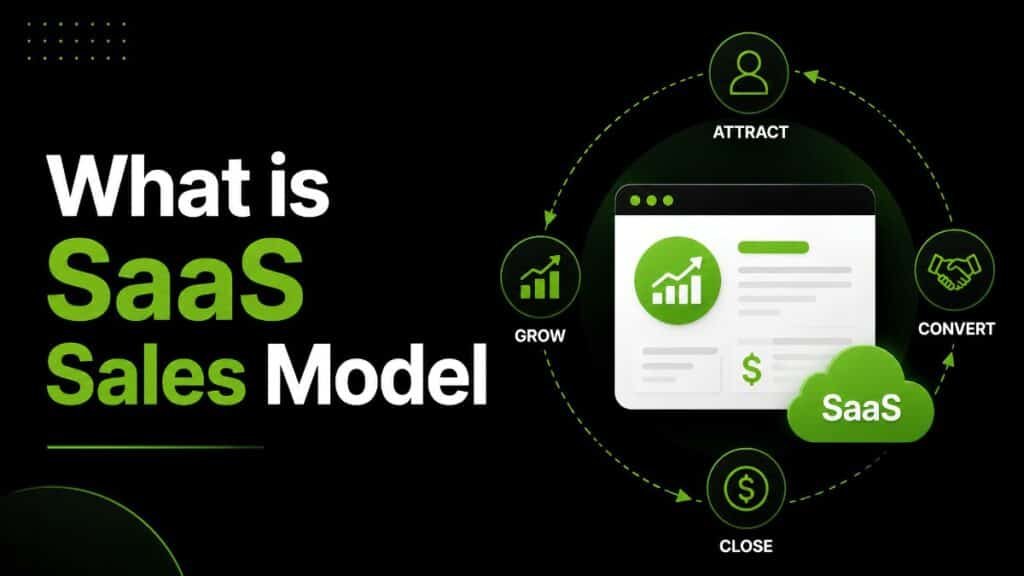
SaaS marketing usually follows a full customer journey. Here is how the process works.
1. Define the Ideal Customer
First, you need to know who you want to reach. A SaaS company may define its ideal customer by looking at industry, company size, role, and budget.
For B2B SaaS, the ideal customer may be a company with 50 to 500 employees. The buyer may work as a marketing manager, sales leader, HR manager, or IT director.
For B2C SaaS, the target may be an individual user. A clear target helps you create better content and ads.
2. Find Customer Problems
You need to understand what your audience wants to solve. You can learn this from customer interviews and sales calls. The approach simply starts with the user’s problem instead of the product.
3. Build Awareness
You need to get your product in front of the right people. For that, you need to focus on the right SEO for SaaS strategy. SEO is necessary to get the attention of organic visitors. In SaaS, you also need paid ads and social media marketing.
The best channel for marketing depends on your audience. If people search Google for solutions to their problems, SEO may help. If your buyers spend time on LinkedIn, LinkedIn content and ads may make more sense.
4. Capture Demand
Once people show interest, give them a clear next step. That step may include:
- Starting a free trial
- Booking a demo
- Creating an account
- Downloading a guide
- Joining an email list
- Requesting a quote
The right action depends on the product. A simple SaaS tool may offer a free trial. An enterprise SaaS product may ask users to book a sales call.
5. Convert Prospects Into Customers
Now the prospect needs to make a buying decision. Your pricing page, product page, trial, demo, sales process, and emails can all affect this decision. A good conversion path removes doubt.
6. Keep Customers
SaaS growth does not end after the sale. You also need to keep customers. You can support retention with:
- Product education
- Customer support
- Email campaigns
- Feature updates
- Usage tips
- Customer success programs
- Renewal reminders
When customers get steady value, they have a stronger reason to stay.
7. Grow Existing Accounts
Existing customers can also create more revenue. A company may offer:
- Higher plans
- More seats
- Extra features
- Add-ons
- Related products
This process often involves expansion revenue. For example, a company may start with 10 users. Later, it may add 50 more users. The SaaS company can grow without finding a completely new customer.
What Is SaaS Digital Marketing?
SaaS digital marketing means using online channels to market a SaaS product. It forms a major part of SaaS marketing. Common SaaS digital marketing channels include:
- Search engines
- Websites
- Blogs
- Social media
- Online ads
- Video
- Webinars
- Online communities
What Is SaaS Content Marketing?
SaaS content marketing uses useful content to attract and educate potential customers. The content should answer real questions and solve real problems. It should not exist only to promote the product.
SaaS companies can create many types of content. The table below mentions the most common types of SaaS content businesses are using.
| Content type | Main goal |
|---|---|
| Blog posts | Answer questions |
| Guides | Teach a topic |
| Comparison pages | Help users compare options |
| Product pages | Explain product features |
| Use case pages | Show how the product solves a need |
| Case studies | Show real customer results |
| Videos | Explain ideas or products |
| Webinars | Teach a topic |
| Templates | Give users a useful resource |
| Calculators | Solve a specific problem |
| Research reports | Share original data |
How Does SaaS Content Work Across the Funnel?
Different users need different content, making the SaaS sales funnel different.
At the top of the funnel, a person may only want to learn about a problem. In the middle, they may compare solutions.
Near the bottom, they may compare products and prices. After purchase, they may need help using the product.
So, your content should cover the full journey.
What Is B2B SaaS Marketing?
B2B SaaS marketing means marketing SaaS products to businesses. B2B stands for business to business.
B2B SaaS marketing often has a more complex buying process than consumer SaaS. Several people may take part in a purchase. For example:
- An employee finds the product.
- A manager reviews it.
- The IT team checks it.
- Finance reviews the price.
- A company leader approves the purchase.
The process can take weeks or months for some products.
What Is the Best Marketing for SaaS Products?
There is no single best marketing channel for every SaaS product. The right channel depends on how your customers search, learn, compare, and buy.
| SaaS situation | Channels to consider |
|---|---|
| People search for the problem | SEO and content |
| High-value enterprise product | ABM, sales, and content |
| Simple self-serve product | PLG, SEO, and paid ads |
| New product with low search demand | Paid media, social, and demand creation |
| Long sales cycle | Content, email, and ABM |
| Strong customer base | Lifecycle marketing and referrals |
| Visual product | Video, social, and SEO |
You should test channels instead of assuming one will work. Start with a small set of channels. Measure the results. Then put more resources into channels that bring useful customers at a sustainable cost.
What Is the Average B2B SaaS Marketing Budget?
There is no single average B2B SaaS marketing budget. Different studies use different groups and definitions.
Some companies measure marketing as a percentage of revenue. Others include different costs in their marketing budgets.
Recent benchmark data shows this variation.
One 2025 benchmark based on 275 US B2B SaaS companies reported a median marketing spend of about 10% to 12% of revenue, while a SaaS Capital benchmark cited in recent reporting puts marketing spend for private B2B SaaS companies at around 8% of ARR.
These figures do not mean every SaaS company should spend 8%, 10%, or 12%.
They show why you should treat industry benchmarks as reference points rather than fixed rules.
What affects a SaaS marketing budget?
Several factors can change the right budget. These include:
- Company stage
- ARR
- Growth target
- Funding
- Customer acquisition cost
- Average contract value
- Sales cycle
- Competition
- Market size
- Product type
- Sales model
A new company may spend more to build awareness. A mature company may spend more on retention and expansion.
An enterprise SaaS company may spend more per customer because each deal has a high value.
How should you set a SaaS marketing budget?
Start with your revenue goal. Then work backward.
For example: Revenue goal → Customer goal → Deal goal → Pipeline goal → Lead goal → Channel budget
This gives you a more useful budget than simply copying another company’s percentage.
hods inside its wider SaaS marketing strategy.
Common SaaS Marketing Mistakes
Even good SaaS teams can make marketing mistakes. Here are some common ones.
Focusing Only on Traffic
Traffic looks good in a report. But traffic does not always create revenue. Track what happens after the visit.
Targeting Everyone
A product rarely fits everyone. A clear target helps you create better messages.
Copying Competitor Content
Competitor research can help. But copying their topics and ideas does not give users a strong reason to choose you. Find gaps. Add new information. Use your own data and experience.
Publishing Content Without Product Relevance
Not every high-volume keyword makes sense for your business. Your content should connect with the problems your product solves.
Ignoring Bottom-of-Funnel Pages
Many SaaS sites publish many blog posts but have weak product and comparison pages. Users near a buying decision need clear commercial information.
Treating Free Trials as Customers
A free trial only shows interest. You need to know how many users activate, use the product, and become paid customers.
Spending Too Much on Paid Ads Too Early
Paid ads can bring traffic fast. But poor targeting and weak conversion paths can waste money. Test your offer and landing page before scaling spend.
Ignoring Existing Customers
Your current customers already know your product. Help them get more value before you focus only on finding new customers.
How AI Search Is Changing SaaS Marketing?
People now use both traditional search and AI-powered search tools to find information.
Google says its AI Overviews and AI Mode use the same core SEO principles as its main Search system. Google also says you do not need special technical requirements or special schema just to appear in these AI features.
This means SaaS companies should focus on useful content first.
Google also recommends creating unique and valuable content for users rather than content that simply repeats what other sites say.
Takeaway
SaaS marketing is much more than running ads for software. It covers the full customer journey. You attract the right people, educate them, and turn them into customers. Then, you help them get value and stay with you.
The best strategy depends on your product and your customers. So, do not copy another SaaS company’s marketing plan without checking if it fits your business.
Start with your audience’s problems. Choose the right channels. Track revenue and retention. Then improve your strategy based on real results.